Free Commerce
Commerce should be free.
Free to connect. Free to compete. Free to choose. Free to leave.
Captive commerce
The digital age was meant to make commerce effortless. Instead it has made commerce captive: to platforms, to proprietary systems, to intermediaries who decide who may connect, what they may see and what it costs to leave.
- A supplier proves the same facts about itself to every customer, in every customer’s format.
- A buyer rebuilds in each new system what it already built in the last.
- Two organisations that want to trade must first pay for their software to be introduced.
The machinery of commerce has grown more sophisticated. Commerce itself has not grown more free.
Open standards are how freedom is built
The internet changed communication because no one needed a company’s permission to connect.
The web changed publishing because no one had to own the web to create on it.
The shipping container changed trade because any ship, any crane and any port could handle the same box.
Each time, a shared standard settled what everyone could rely on and left everyone free to build on top of it.
Interoperability should be a right, not a privilege.
The three states of commerce
Beyond independence
Participants tied to platforms they cannot afford to leave.
Dependence
Participants tied to platforms they cannot afford to leave.
Independence
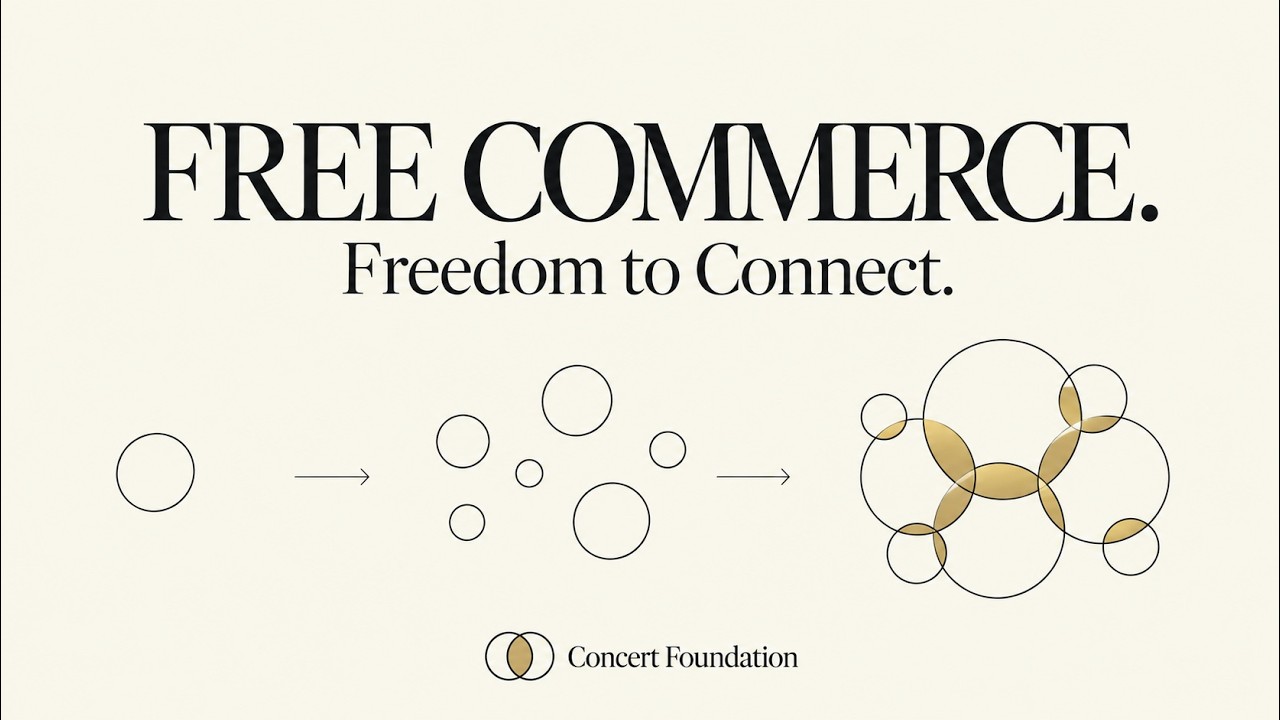
Every organisation and platform able to stand on its own, free to walk away. But a platform that stands alone still trades alone.
Interdependence
Platforms and participants that could each stand alone, choosing to rely on one another.
Everyone is free to leave, and chooses to stay.
That is what a standard is for.
The five principles
- 01
Commerce should be free
To connect, to compete, to choose and to leave.
Read in the manifesto - 02
Open standards are how freedom is built
A shared standard settles what everyone can rely on and leaves everyone free to build.
Read in the manifesto - 03
Trust should travel
Identity, credentials and reputation that move with the organisations that earned them.
Read in the manifesto - 04
Intelligence should widen opportunity
Agents that work across boundaries and carry their authority with them.
Read in the manifesto - 05
Compete on value. Cooperate on standards.
Competition belongs above the standard, not over control of it.
Read in the manifesto
SIGNET
We begin with procurement
SIGNET is the first practical expression of Free Commerce: an open standard for governed, intelligent, interoperable procurement. It gives buyers, suppliers and platforms a common language for the path from need to sourcing, award, contract, order and invoice.
Our commitment
- iWe will not become the platform through which everyone must trade.
- iiWe will hold no preferential relationship with any operator.
- iiiWe will work in the open, and record what we decide and what we decline.
- ivWe will claim only what we can show.
We are not here to build another gate.
We are here to make sure no one owns the road.
Open standards. Open markets. Open opportunity.